The best tailor in Bangkok is the one that passes ten simple checks: a real shop with a fixed address, prices you can see, cloth you can check, your own paper pattern, at least two fittings, a schedule that fits your trip, reviews you can verify, help after you take the suit home, easy contact and no pressure. Use the list below in any shop you visit, including ours.
If you're reading this, you've probably searched for a tailor, found hundreds, and noticed that every one of them is "the best". Some will tell you so before you've finished saying hello. Feeling unsure is completely normal. You're in a new city, maybe for only a few days, and you're about to pay a deposit for something you can't see yet.
We're ITORVANI, a tailor on the 4th floor of Platinum Fashion Mall, and we've been making suits in Bangkok since 2005. This checklist is what we'd tell a friend. It works in any shop, and none of it depends on taking our word for anything.
What "good" should mean for you
There's no single best tailor for everyone. The right one for you depends on three things:
- Your budget. A good tailor makes fair suits at several prices and tells you plainly what changes between them. More money should buy better cloth and more handwork, not just a nicer showroom.
- Your time. A few days in Bangkok is enough for a properly fitted suit if you start early in your trip. A good tailor plans the fittings around your flight, not the other way round.
- What the suit is for. A suit for daily office wear in Bangkok's heat needs different cloth from a wedding suit, or a winter suit for home.
Keep those three in mind, then put every shop through the ten checks below.
The 10-point checklist
1. A real shop with a fixed address
Choose the tailor yourself, and visit a shop with an address you can find on Google Maps. Be careful when a friendly stranger or a driver offers to take you to a tailor with a "special price today". Wikipedia's article on the Thai tailor scam explains how it usually goes: you pay up front and receive a poorly fitting garment in cheaper cloth than you were promised. A fixed address also means you can come back if something needs fixing.
Warning sign: someone you met on the street is very keen to walk you to "their friend's" shop.
2. Prices you can see
A good tailor can tell you the price before you sit down, and better still, shows it in writing or online. The price should be per garment and say what's included: the cloth, the fittings and any alterations. If the price changes every time you ask, or seems to depend on how much you like the cloth, keep walking.
Warning sign: a package so cheap that it throws in extra shirts and a tie for less than one good suit should cost. Something has to give, and it's usually the cloth or the fit.
3. Cloth you can check
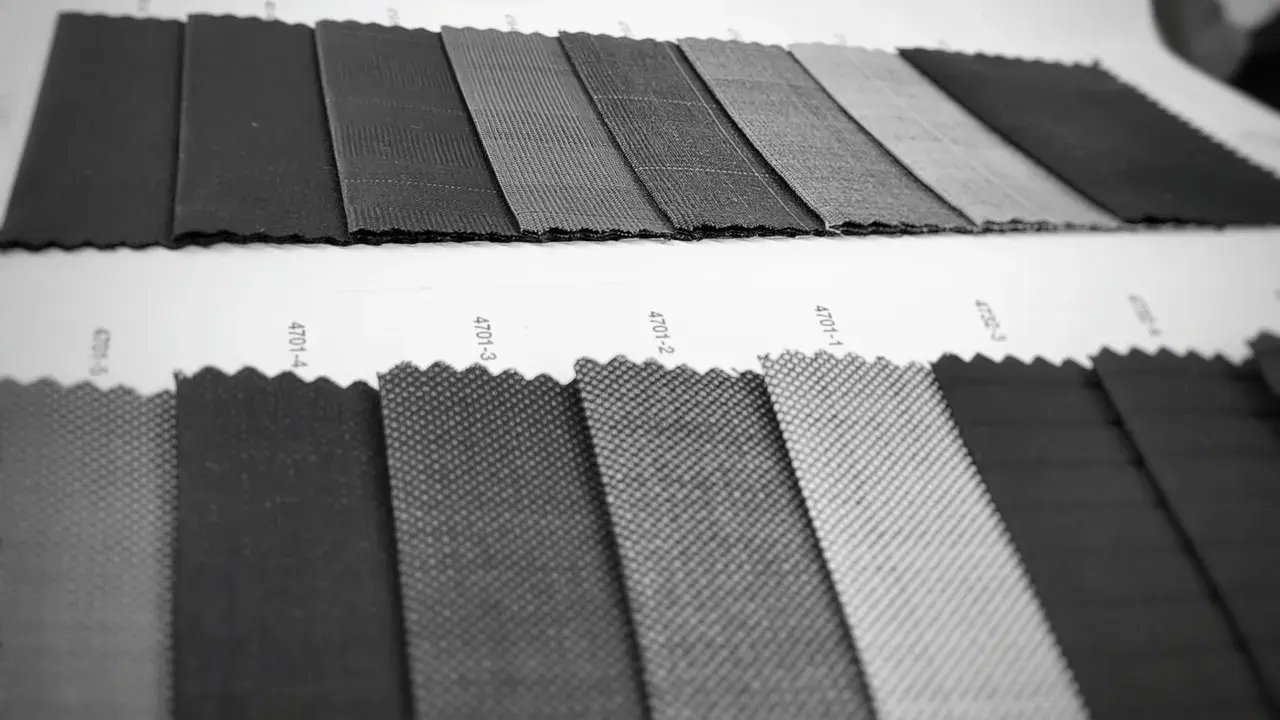
Ask what the cloth is made of, and look for the label on the roll or the swatch. A 100% wool suit and a 20% wool suit can look alike on the shelf and feel very different after a day in the heat. Neither is wrong; the price just has to match what you're getting. For suits you'll wear in Bangkok, ask about the weight too. We usually suggest 250–280 GSM (grams per square metre), because lighter cloth breathes better. Our fabric guide explains the common cloths in plain English.
Warning sign: nobody can tell you what the cloth is made of, or the only answer is "very good quality". If a tailor promises you the moon but can't name the fibre, the moon is probably polyester.
4. Your own paper pattern
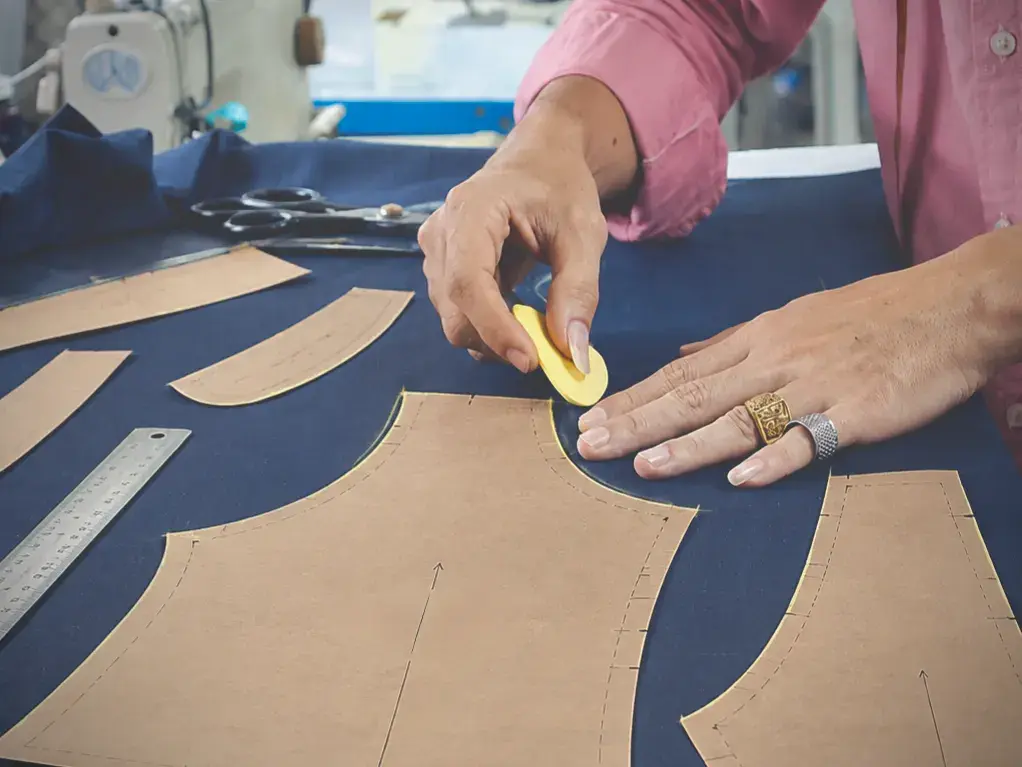
This is the big one. A bespoke suit starts with a new paper pattern drawn from your own measurements. Many shops instead take a standard pattern and change a few numbers. That's made-to-measure: a fair service, but a different product at a different price. Ask the tailor which one you're getting, and ask to see your pattern. Our guide to bespoke vs made-to-measure has seven questions that tell the two apart.
A good tailor also keeps your pattern on file. That's what lets you order your next suit from home, cut from a fit that has already been proven on your body.
Warning sign: you're measured in five minutes, standing up only, and nobody mentions a pattern.
5. At least two fittings
A suit should be tried on before it's finished. At the first fitting, the jacket is basted (held together with loose stitches), so the tailor can chalk changes straight onto it while you wear it. At the second, you try the finished suit, and anything still not right is fixed. A good tailor will also ask you to sit down, because a suit that fits standing but pulls when you sit is really a suit for statues.
Read what happens at a suit fitting for the details a good tailor checks.
Warning sign: no fitting at all between measuring and collection. That's the clearest sign you're not getting a fitted suit.
6. A schedule that fits your trip
Ask for the dates of each fitting before you pay, and tell the tailor when you fly. A good tailor plans the work backwards from your flight. Make your first visit early in your trip, so there's room for a second or third fitting if the suit needs one.
Warning sign: vague answers like "come back later, it will be ready". You want days and times, not hope.
7. Reviews you can check
Read the tailor's Google reviews, not just the quotes on their own website. Look at how many there are, how recent they are and what they actually say. A review that mentions a fitting, a fabric or a staff member by name is worth ten that just say "good". Look at how the shop replies, too.
Warning sign: a perfect star rating from very few reviews, or lots of reviews posted on the same day that all sound alike.
8. What happens after you take it home
Bodies change, and so do plans. Ask what happens if the suit needs a small adjustment a month later. A good tailor fixes their own work for free for a while after you take it home, and tells you exactly how long. If you'll fly home before the suit is ready, ask about shipping, and ask whether you can reorder from home.
Warning sign: the answer is a shrug, or an extra charge to fix the tailor's own mistake.
9. Easy to reach
You'll want to send photos, check a fitting time or ask a question from your hotel. A tailor you can message on WhatsApp, who replies clearly, will also be easy to reach after you fly home. Send a short message before you visit: how quickly and clearly they reply tells you a lot.
10. No pressure
A good tailor lets you look, touch the cloth, ask questions and leave to think it over. A deposit is normal, but you shouldn't be pushed to pay the full price before you've had a fitting. If the shop keeps talking about a "special price, today only", today is a good day to walk out.
The checklist at a glance
Take a screenshot of this table and use it in every shop you visit.
| Check | What to ask | Good sign | Warning sign |
|---|---|---|---|
| Real shop | Where exactly is your shop? | A fixed address on Google Maps | A stranger or driver brings you there |
| Prices | What does one suit cost, and what's included? | Written prices per garment | A price that changes as you talk |
| Cloth | What is this cloth made of? | A label with the fibre content | "Very good quality" and nothing more |
| Pattern | Will you draw a new pattern for me? | Yes, and you can see it | Measured in five minutes, standing only |
| Fittings | How many fittings are included? | At least two, more if needed | No fitting before collection |
| Schedule | When is each fitting? | Dates planned around your flight | "Come back later" |
| Reviews | Where can I read your reviews? | Many recent Google reviews with detail | Few reviews, or many that sound alike |
| Aftercare | What if it needs fixing later? | Free alterations for a stated time | A shrug, or a charge for their own mistake |
| Contact | Can I message you on WhatsApp? | Clear, quick replies | Hard to reach before you've paid |
| Pressure | Can I think about it? | "Of course" | "Special price, today only" |
Questions to ask on your first visit
- Is this a new pattern drawn for me, or a standard one adjusted to my size?
- What is this cloth made of, and how heavy is it?
- How is the jacket built inside: full canvas, half canvas or fused?
- How many fittings are included, and when are they?
- What happens if it isn't right at the final fitting?
- If it needs adjusting after I take it home, is that free, and for how long?
- How much deposit do you need, and when do I pay the rest?
- Can you ship it to me if I fly home before it's finished?
A tailor who's proud of the work will be happy to answer every one.
How to compare two quotes fairly
Two prices only mean something when they describe the same suit. Before you compare, check that both quotes cover:
- The same cloth: the same fibre content and a similar weight.
- The same build inside the jacket: full canvas, half canvas or fused.
- Your own new pattern, or an adjusted standard one.
- The same number of fittings, and free alterations afterwards.
Once those match, the difference in price starts to make sense. Our Bangkok tailor pricing guide explains what each part of the price pays for.
Frequently asked questions
How do I choose a good tailor in Bangkok?
The right tailor for you is the one that passes the checklist above: a real shop, clear prices, cloth you can check, your own pattern, at least two fittings and help after you take the suit home. Visit two or three shops, ask each one the same questions, and compare the answers, not just the prices.
How much should a good suit cost in Bangkok?
It depends on the cloth and on how the jacket is built inside, so always compare like for like. As one example, at ITORVANI: One suit costs 13,900 THB (Premium), 9,900 THB (High End) or 4,500 THB (Basic). Order more and the price per suit drops - our lowest is 4,000 THB per suit, for 4 Basic suits. Every price includes your own pattern and all fittings.
How many fittings should a good tailor do?
At least two for a suit: a basted fitting while the jacket can still be changed, and a final fitting on the finished suit. A third is sometimes needed, and it shouldn't cost you extra.
How long does a good suit take in Bangkok?
Usually a few days, because the fittings need time in between. At ITORVANI a suit usually takes 3–4 days, or 48 hours on express. Make your first visit early in your trip and tell the tailor when you fly.
Do I need to book, or can I walk in?
Most tailors welcome walk-ins, and so do we. Booking ahead means the tailor can have suitable cloth ready and give you proper time without a wait. You can book a fitting or message us on WhatsApp.
Whichever shop you choose, take this checklist with you. And if you'd like to see how we work, book a fitting or message ITORVANI on WhatsApp at +66 94 746 1393. You'll find us on the 4th floor of Platinum Fashion Mall, Zone 2.