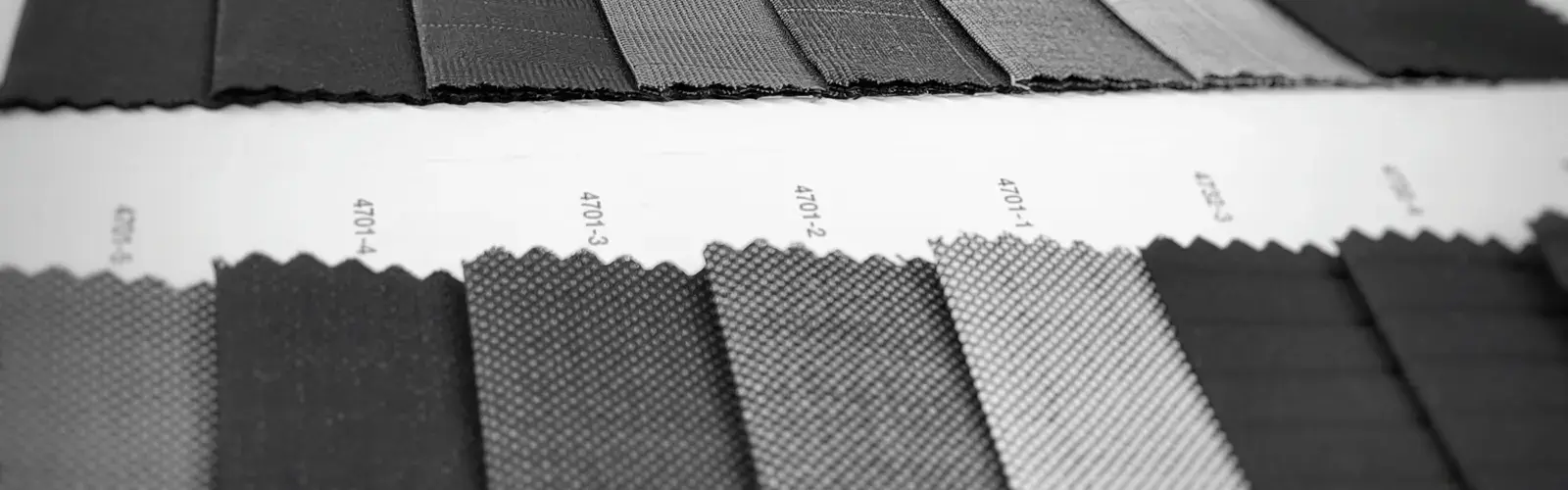
Wool Suit Fabric in Bangkok
Wool is the cloth most of our suits are made from. Some cloth on this page is 100% wool and some is a wool blend, and we tell you the exact content of each. This page is about wool only: the types we hold (100% wool, suiting, solid colours, tweed and jacketing), how each of our three suit tiers uses it, what weight, weave and fibre content to look for, and how it wears in Bangkok's heat. You choose the cloth in the shop with the cloth books in front of you.
How our three suit tiers use wool
Every suit starts from your own paper pattern. What changes between tiers is the cloth and what is inside the jacket. The price is for one suit, with all fittings included.
| Tier | Cloth | Inside the jacket | From |
|---|---|---|---|
| Premium | 100% wool | Fully canvassed | 13,900 THB |
| High End | 60% wool blend | Half-canvassed | 9,900 THB |
| Basic | 20% wool, 30% silk, 50% viscose | Fused | 4,500 THB |
Basic is a blend with only 20% wool, so it is not a wool suit in the way Premium is. It suits a suit you wear hard and replace. The full price list, with discounts for ordering more than one suit, is on our suit prices page.
Why wool works for a suit
It breathes
Wool lets air and moisture pass through. In a light, open weave it is more comfortable in the heat than most people expect.
It handles sweat
Wool takes up moisture before it feels wet, then lets it go again. Wool industry sources put it at around a third of its own weight in moisture vapour. Near a flame, wool does not melt or drip the way polyester can. It chars and tends to go out by itself.
It springs back
Each fibre has a natural crimp, like a tiny wave. After you sit or fold your arms the cloth recovers, and a wool suit hung overnight loses most of its creases.
It holds a tailored shape
Wool can be pressed and shaped with steam. That lets the tailor build a clean shoulder and lapel that the jacket keeps for years.
Wool in Bangkok heat and humidity
Bangkok is hot all year and humid for much of it. Most of your day is spent between air-conditioned rooms, so a suit has to be comfortable in both. We usually suggest 250–280 GSM. At the lighter end the cloth is cooler and travels well. At the heavier end it hangs straighter and feels more solid, but it is warmer.
For the hottest outdoor days, look at linen, which is cooler but creases more, or a blend such as wool, linen and silk. Our guide to the best fabrics for Bangkok's climate compares them.
Four details that change how a wool suit feels
Weight
Each cloth in our books has its weight printed on the label, in grams, marked GSM. Most of our suit cloth is 250–280. A lower number is a lighter cloth. A light cloth feels cooler, and it tends to crease a little more. A heavy cloth is warmer and keeps its line.
Weave
The way the threads cross changes how the cloth looks and drapes.
- Plain weave
- One thread over, one under. Flat, simple and open, with no pattern to see.
- Twill
- Fine diagonal lines in the cloth. It drapes well and is one of the most common suit weaves.
- Herringbone
- A twill with a zigzag line, like a fish skeleton. You notice it up close more than from across a room.
- Stripes and checks
- These are patterns on a weave, not weaves themselves. A pinstripe can be woven in a plain weave or a twill.
Worsted or woollen
Suit cloth is usually worsted: the fibres are combed straight before spinning, so the yarn is smooth and the cloth looks sharp. Woollen cloth, such as tweed, is fuzzier and warmer. It is better for a country jacket than for a suit in Bangkok.
Wool percentage
In our experience, 100% wool breathes best and keeps its shape longest. A blend is easier on the budget, but the less wool in it, the less of those qualities you get. We always tell you the exact content of the cloth you pick.
Wool types and colours
A screen never shows cloth exactly. In the shop you go through the cloth books and hold each cloth next to your skin and your shirt, in daylight, before you decide.
100% wool
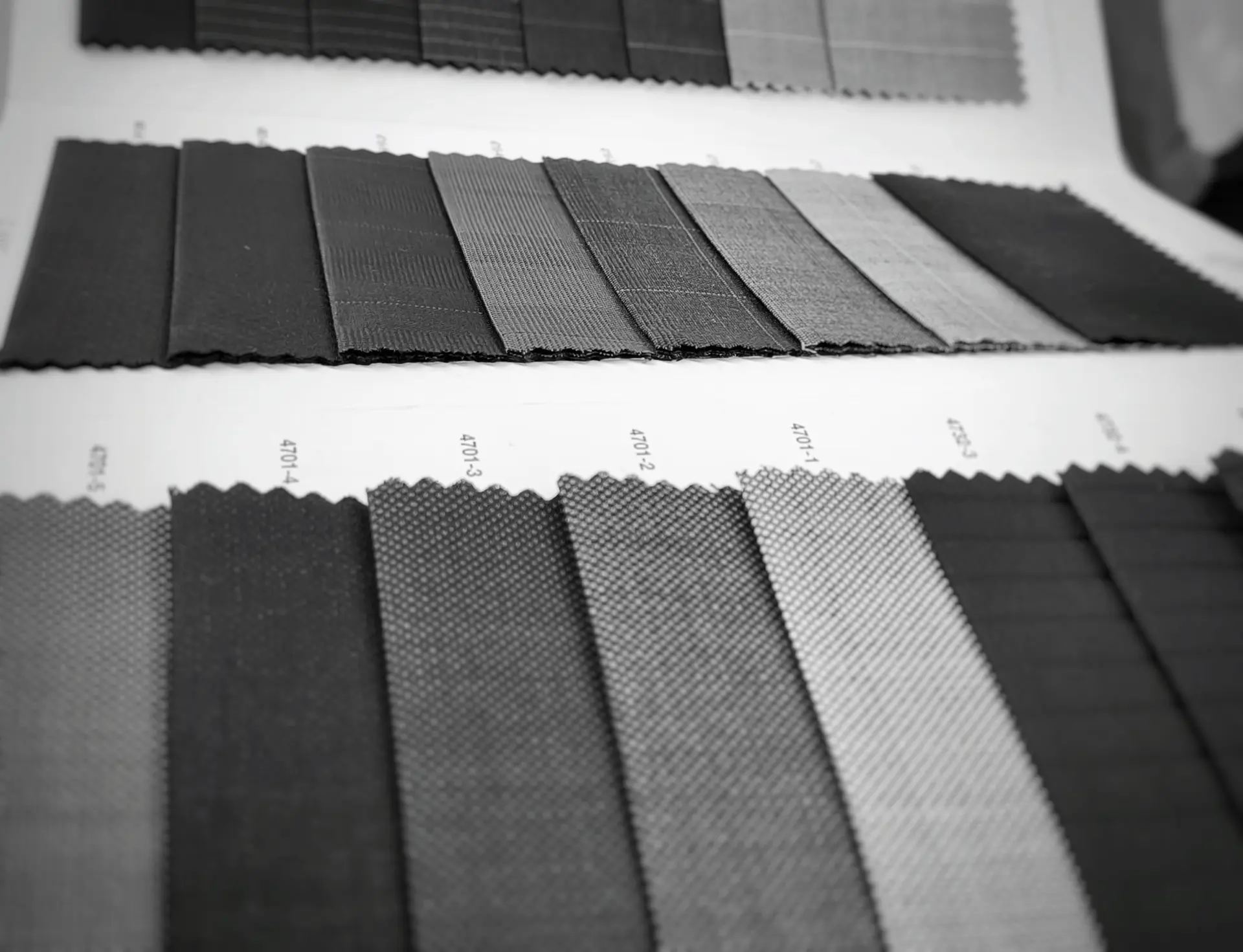
Cloth woven from 100% wool, the cloth of our Premium suit. Plain, striped and herringbone weaves, mostly in deep colours. Every colour in our cloth book is below, each with its code.
- Feels
- Smooth and springy
- In the heat
- Cool in light weights
- Creases
- Rarely
- Best for
- Business and everyday suits
What a Super number means
A Super number such as Super 120s describes how fine the wool fibre is. It does not measure weight, or how well a suit is made. By the Woolmark specification, and under US labelling law, Super 100s means the average fibre is no thicker than 18.75 microns, Super 120s 17.75 and Super 150s 16.25. A finer cloth feels softer, and retailers say very fine cloth can show wear sooner.
Fresco and tropical wool
Tailors use these names for wool made for heat. Fresco is a high-twist wool in a plain weave: open, breathable and resistant to creasing. Tropical wool is a lighter weight for warm weather. Both usually carry no Super number. Ask us which of these are in the cloth books.
100% wool colours
Showing 20 of 42
Suiting: stripes, checks and plains
Suiting in pinstripes, checks, houndstooth and plains, in navy, charcoal, brown and green with a few brighter shades. Every cloth in our suiting book is below.
Suiting: stripes, checks and plains colours
Showing 20 of 55
Solid-colour wool
Wool in solid colours, from neutrals to bright shades. Navy, grey and brown for the office, and pink, teal and orange for a jacket that stands out.
Solid-colour wool colours
Showing 20 of 27
Tweed wool
Woollen cloth with texture: herringbone, houndstooth and windowpane checks. It is fuzzier and warmer than suiting, so it suits a jacket better than a full suit in Bangkok's heat.
Tweed wool colours
Showing 20 of 37
Jacketing cloth
Cloth for jackets and blazers: windowpane and glen checks and plaids in blues, greys and browns, plus a few plains.
Jacketing cloth colours
Showing 17 of 17
Merino wool
Merino is a breed of sheep known for fine wool. We sell our cloth as wool, by its fibre content and fineness, not by the breed name. Ask us whether a cloth you like is merino.
Merino is a breed, not a grade
Merino is the name of the sheep. A merino cloth can be very fine or only medium, so what tells you the fineness is the micron figure or the Super number. Ask for it.
Why fine wool does not itch
Wool feels prickly when its fibres are coarse, from roughly 30 to 32 microns upward. Merino is generally under 24 microns. Woolmark notes that wool itch is mechanical, not an allergy.
Which colour for which occasion
| Occasion | Colours that work | Note |
|---|---|---|
| Wedding (guest or groom) | Navy, charcoal, light grey | A lighter weight if the venue is outdoors. |
| Office | Navy, charcoal, mid grey | A weight you can wear all day under air conditioning and outside. |
| Evening and black tie | Black or very dark navy | See our tuxedos for the cut and details. |
Planning a wedding? See our wedding suits, or our business suits for the office.
Looking after a wool suit in Bangkok
- Hang it on a wide wooden hanger after wearing, and give it a day or two before you wear it again.
- Brush it lightly to take off dust. Steam out creases rather than ironing the cloth flat.
- Dry clean only when it needs it. Too much cleaning wears the fibre down.
- Keep it somewhere dry with air around it. Do not leave it in a closed plastic bag in the rainy season.
More in our guide to caring for a suit in Bangkok's humidity.