Step outside anywhere in Bangkok at 2pm and the air does something most fabric was never designed to survive. It doesn't feel like heat so much as a warm, wet towel being held against your entire body, indefinitely, while you try to look presentable in a client meeting. If your suit was cut from cloth meant for a London winter, this is the moment it quietly turns on you.
The good news is that "suit weather" isn't actually about Bangkok being unreasonable. It's about most suits being built for somewhere else. Once you know what to ask for, dressing sharp here stops being a punishment and starts being genuinely comfortable — even in September.
Why Your Old Suit Feels Like a Sauna
Three things usually go wrong at once: the cloth is too heavy, the weave is too tight, and the jacket is built too stiff inside. Heavy cloth traps heat. A tight, dense weave blocks airflow. And a stiff, heavy interlining doesn't move with your body — so heat and sweat just sit there, between your shirt and the jacket, with nowhere to go.
None of that is really about "wool versus not wool." Plenty of wool works beautifully here. It's about weight, weave, and construction — and weight is the one number most people never ask about.
The One Number That Actually Matters: GSM
GSM stands for grams per square metre — literally how much a square metre of the cloth weighs. It's a far more useful question to ask a tailor than "is this good fabric," because weight is what your body actually feels.
- Under 200 GSM: very light, but often too delicate for daily wear — creases fast and doesn't hold a jacket's shape well over a long day.
- 220–280 GSM: the range we point most Bangkok-based customers toward. Substantial enough to hold a proper shoulder line and drape, light enough not to fight the climate.
- Above 320 GSM: comfortable in an air-conditioned office in October in Europe. In Pratunam in April, it's a small wool blanket with buttons.
Fabrics That Actually Work Here
A few cloth types come up again and again for tropical climates, and for good reason:
- Tropical wool (high-twist worsted) — a tightly spun, lightweight wool woven to let air move through it. The industry standard for hot-climate suiting, and for good reason.
- Fresco weave — an open, slightly textured wool weave that's almost aggressively breathable. Wrinkles fall out on their own within a few hours of hanging, which matters a lot when you've been sitting in traffic on the way to a meeting.
- Wool-linen blends — linen adds crispness and airflow, wool keeps the linen from wrinkling like a grocery bag. A good middle ground if you want texture as well as comfort.
- High-twist gabardine — smooth, close to the body without feeling heavy, and it holds a crease well if you're pairing trousers with an odd jacket.
What to Leave on the Shelf
Flannel, tweed, and heavy twill are built to trap warmth — exactly what you don't want in Bangkok. They're not "bad" fabrics, they're just answering a different climate's question. Very high super-count wools (super 150s and above) are another trap: they feel incredible under air conditioning in the showroom, but they're delicate, crease easily, and don't hold up well to a daily commute through heat and humidity.
Color, Weave, and the Canvas Underneath
Lighter colors and open weaves both help airflow, but construction matters just as much as the cloth on the roll. A floating canvas — a layer of horsehair and wool hand-padded into the chest — moves with your body and lets air pass through the jacket instead of sealing it in. It's slower to build, but it's a large part of why a well-made jacket actually feels cooler than a cheaper one cut from the exact same cloth.
What We Actually Recommend
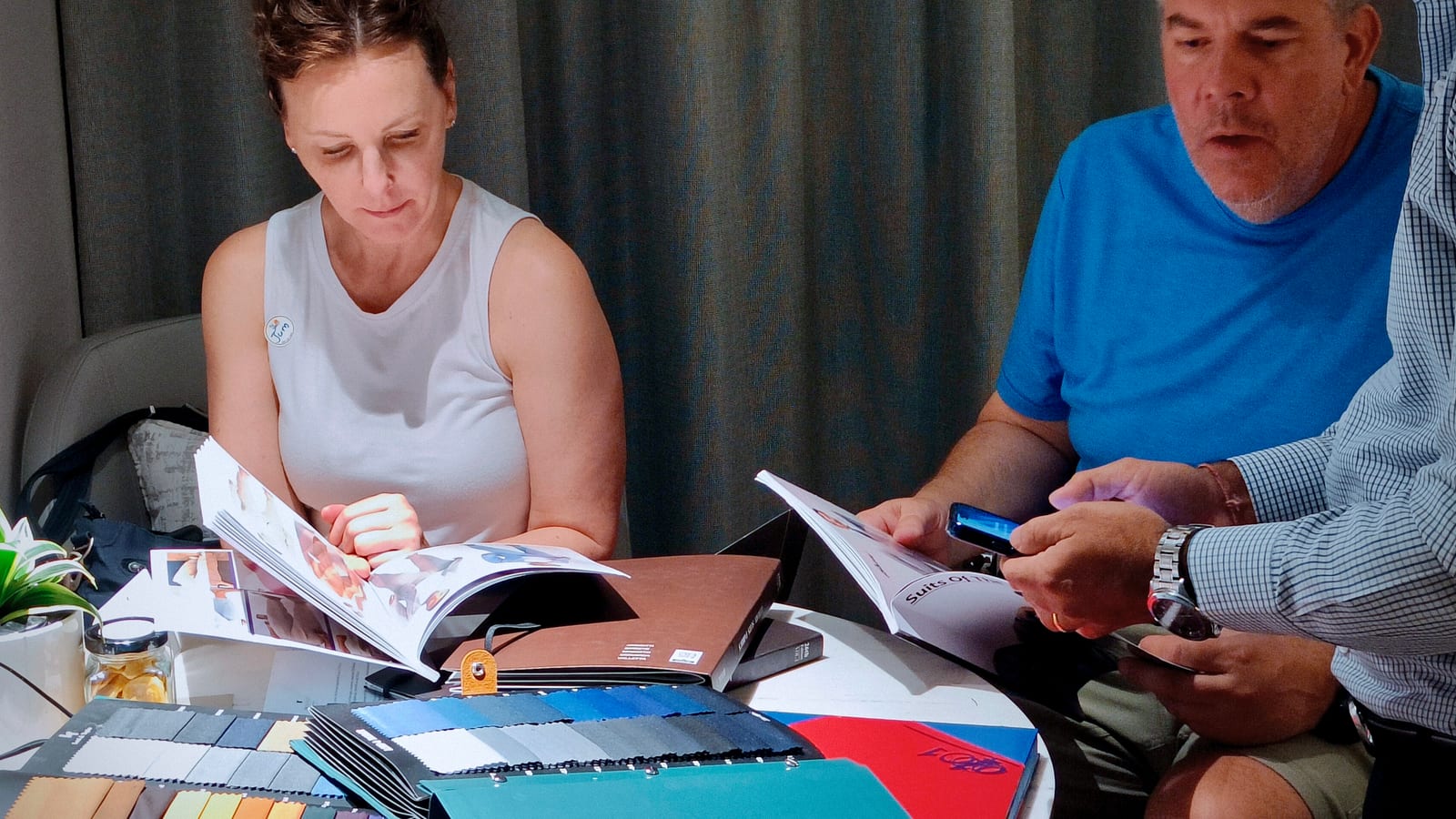
At ITORVANI, we generally steer customers toward 220–280 GSM, suited to Bangkok's heat and humidity. That's not a rule we apply blindly — during your consultation we'll pull cloth off the wall so you can feel the actual weight before you decide, and talk honestly about where you'll be wearing the suit and how often. A suit for the office five days a week has different priorities than a tuxedo you'll wear twice a year.
If you're building a suit for daily wear in Bangkok's climate, our Business Suits page goes into the construction side of that in more detail. If you're starting from scratch, the Bespoke Suits page walks through the full process, fabric selection included.